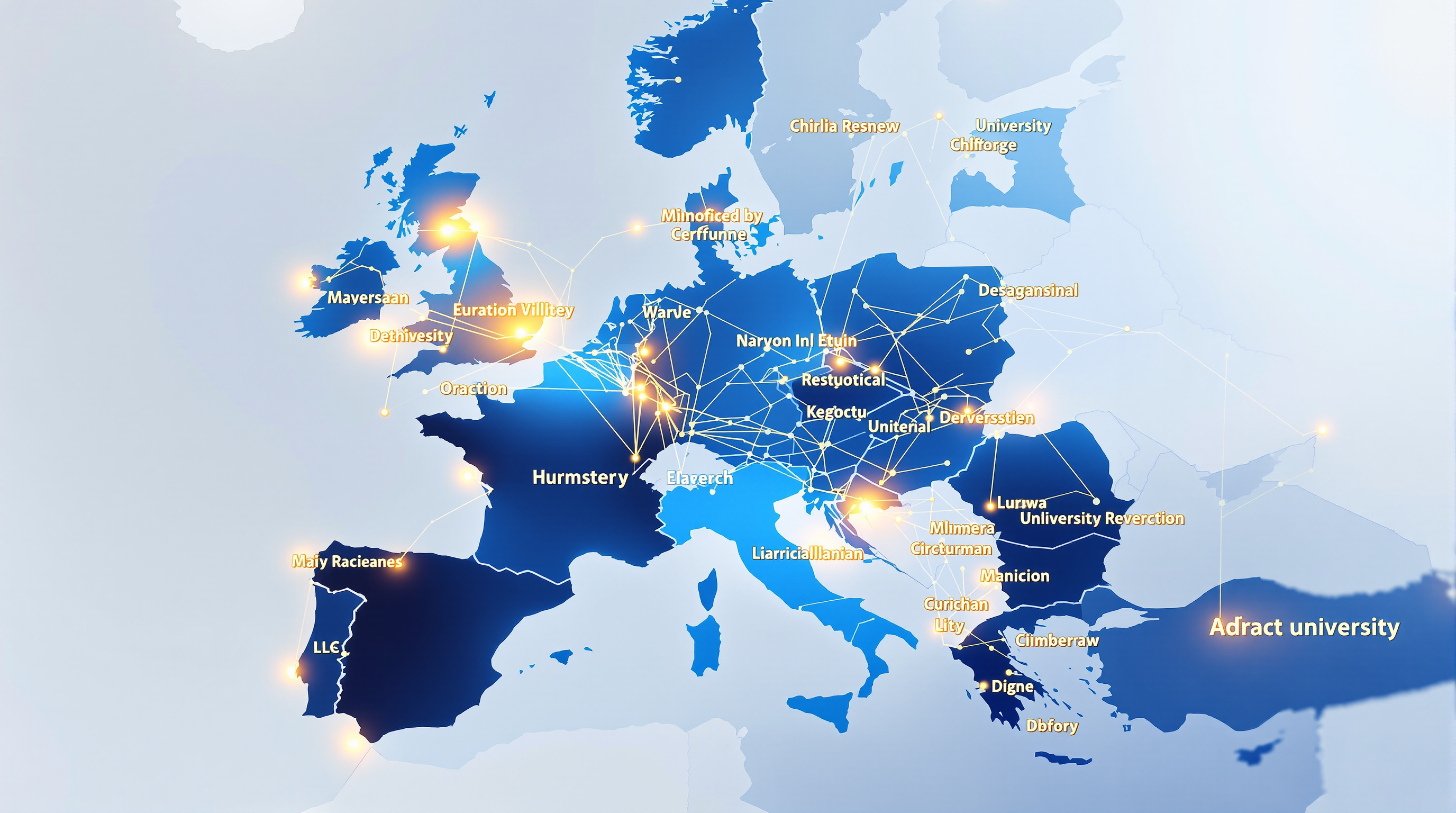
The Agentcities testbed did not emerge from a single grant or a single laboratory. It was sustained by a constellation of separately funded projects, most of them backed by the European Union's Framework Programmes, that each contributed people, platforms, and infrastructure to a shared global network. This federated funding model — independent projects pooling effort around a common testbed — mirrored the technical architecture of the network itself, and it allowed contributions from dozens of organizations to add up to something far larger than any one of them could have built alone.
Agentcities.NET
Agentcities.NET was the coordinating heart of the European effort, funded as an IST project under the EU's 5th Framework Programme. Rather than building applications directly, it provided the resources, support, and coordination that allowed European organizations to connect their own FIPA platforms to the global testbed and to contribute research to the shared agenda. Its consortium drew together major European universities and research institutes, and its work concluded around 2003. A continuation under the 6th Framework Programme was being prepared as the broader initiative wound down, but the network had already established itself as the largest open multi-agent testbed of its era.
Agentcities.RTD
Agentcities.RTD was the large-scale demonstration arm of the initiative, charged with proving that agent-based dynamic service composition could work at meaningful scale. Its headline demonstration, staged in June 2003, showed agents discovering and assembling distributed services across the live network. Beyond the demonstration itself, the project produced draft technical inputs and specifications and developed concrete infrastructure components — most notably network monitoring services and service directories — that fed directly into the Agentcities Task Force technical recommendations. Its emphasis on running infrastructure, rather than slideware, gave the wider initiative much of its practical credibility.
Agentcities.ES (Spain)
Agentcities.ES served as the national branch coordinating Spanish research institutions, launching its web presence in September 2003. It acted as a Spanish-language entry point that lowered the barrier for both Spanish and Latin American research communities to engage with the network. Through Agentcities.ES, connections were coordinated from major Spanish universities, including the Universidad Politécnica de Madrid and the Universitat Politècnica de Catalunya in Barcelona. The Spanish branch illustrated how the global initiative deliberately built regional, language-aware footholds rather than expecting every participant to engage exclusively through English-language channels.
Agentcities.UK (United Kingdom)
Agentcities.UK channelled participation from the United Kingdom's research community, which brought strong British traditions in formal methods and distributed artificial intelligence to the network. Contributing groups included teams at Imperial College, the University of Southampton — which carried significant Semantic Web connections through its work on linked data and knowledge representation — and the University of Edinburgh. UK groups contributed substantially to working group specifications, lending rigour to the network's formal foundations and reinforcing the bridge between the agents community and the emerging Semantic Web research agenda.
The openNet Forum
As the original projects approached their conclusions, a successor body was proposed across 2003 and 2004 under the name the openNet Forum. Its mandate was deliberately broader than Agentcities alone, aiming to unite FIPA agent technology with the Semantic Web and GRID computing under a single convergence agenda. Draft statutes were circulated, and the New York meeting of July 2004 effectively served as the openNet Forum's convening. Although the Forum never formalized into a lasting institution, that meeting produced valuable documentation of the convergence agenda and captured how the community envisioned the future of open, large-scale distributed intelligence.
Technical Recommendations Portal
The accumulated engineering knowledge of the initiative was distilled into a set of draft technical recommendations published by the Agentcities Task Force. These covered a network monitoring services specification, a platform directory specification, a service directory specification, and the integration of web services with agent platforms. Each recommendation was peer-reviewed and grounded in real experience operating the testbed, so collectively they represent the practical technical wisdom of running an open, federated, multi-organization agent network — a body of work whose lessons remain instructive for anyone building large-scale distributed systems today.
The collaborative, publicly funded model that underpinned these projects did not end with Agentcities. Horizon Europe continues the tradition of EU-funded collaborative research networks that made projects like Agentcities.NET possible, sustaining the model of pooling effort across many institutions around shared infrastructure and shared scientific goals.