The Agentcities network was, at its core, an exercise in interoperability. Its purpose was not to build a single monolithic system but to connect dozens of independently operated agent platforms into a coherent global testbed where software agents could discover one another, exchange messages, and compose services regardless of where they were hosted or who operated them. Achieving this required a shared technical foundation, and that foundation was the family of specifications produced by the Foundation for Intelligent Physical Agents (FIPA).
What distinguished Agentcities from earlier agent research was scale and openness. Rather than demonstrating interoperability between two laboratories that had agreed on conventions in advance, the network aimed to let an agent on a platform in Barcelona discover and transact with an agent on a platform in Tokyo with no prior bilateral arrangement. Meeting that goal forced the community to confront the practical engineering problems of federation, discovery, and semantic agreement on a real, persistent, internet-scale deployment.
FIPA Platforms and Agent Management
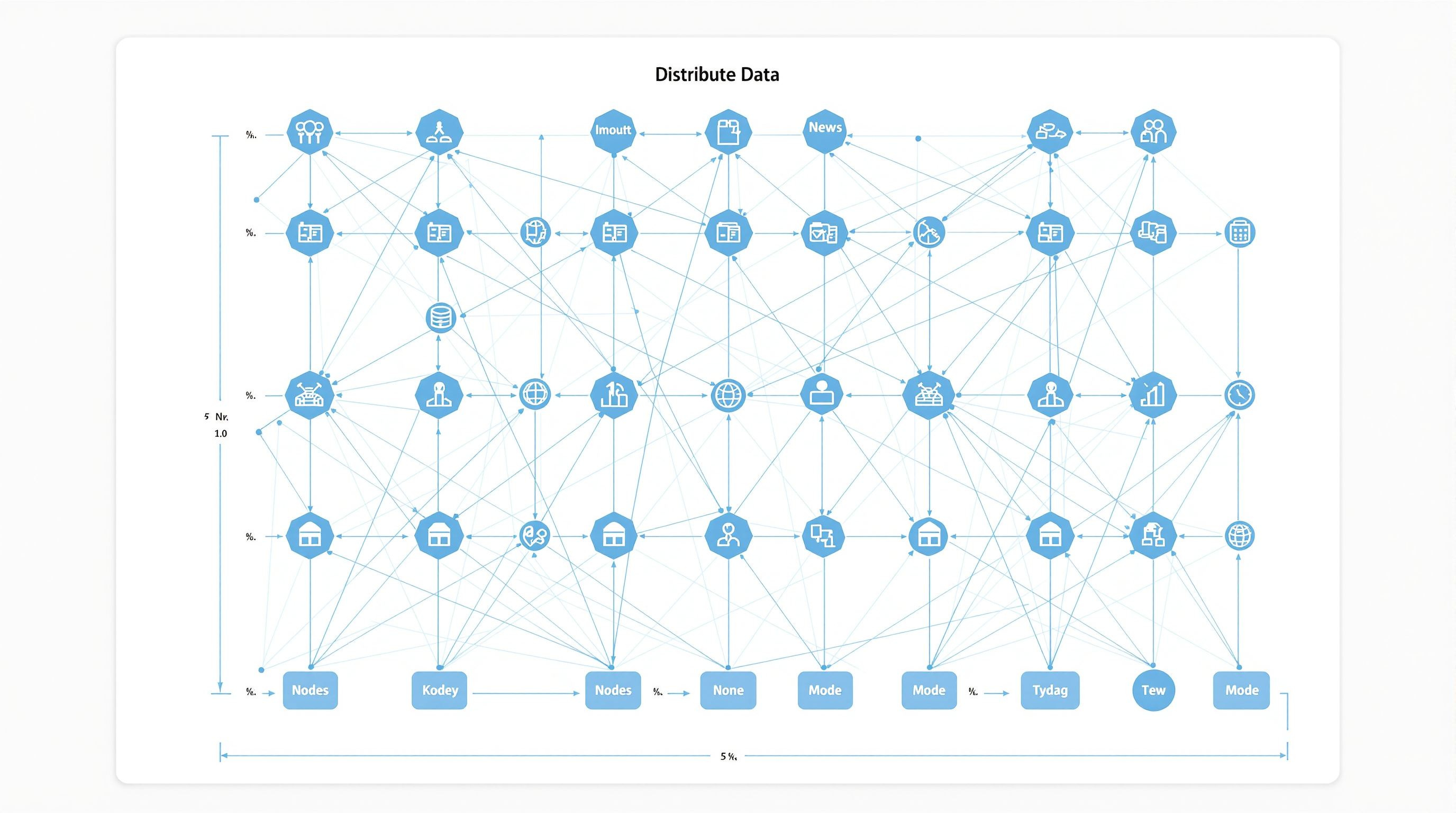
Each participating organization ran one or more FIPA-compliant agent platforms. A conformant platform provided three mandatory infrastructure components. The Agent Management System (AMS) acted as the platform authority, registering agents and managing their lifecycle — creation, suspension, resumption, and termination — and maintaining the authoritative white-pages directory of every agent resident on the platform. The Directory Facilitator (DF) provided a yellow-pages service, allowing agents to advertise the services they offered and to discover services offered by others. The Message Transport Service (MTS) handled the routing of messages between agents, both locally and across platform boundaries. In the Agentcities network these components were exposed across the public internet, enabling agents in Barcelona to discover and interact with agents in Tokyo without any prior bilateral agreement.
Discovery and Federation
The central technical challenge addressed by the Architecture Working Group was service discovery at scale. Within a single local FIPA platform, discovery is straightforward: an agent simply queries its own Directory Facilitator. Across a global network of independent platforms, however, no single directory holds the complete picture, and discovery instead requires federation — directory services that share information with one another without any centralized point of control or failure. The architecture envisioned a hierarchy of domain-level directories, in which individual platforms registered with regional aggregators, and those aggregators in turn federated upward toward a network-wide view of available services. The Architecture WG produced the specifications describing this model and validated prototypes of it through live deployment on the running testbed rather than in simulation alone.
Communication and Interoperability
Messages between agents were expressed in FIPA-ACL (Agent Communication Language), a formal language for inter-agent communication. FIPA-ACL is semantically grounded in modal logic, which gives each message a well-defined meaning — a speech act such as inform, request, or propose — that is independent of the transport carrying it. This separation of meaning from delivery mechanism was essential to interoperability across heterogeneous platforms. Yet a shared communication language was not sufficient on its own: for two agents to genuinely understand one another, they also needed shared ontologies — formal vocabularies defining the concepts, attributes, and relationships referenced in their messages. Ensuring that ontologies could be reused and reconciled across organizational boundaries was the responsibility of the Ontology Working Group, and it remained one of the network's most demanding problems.
Technical Recommendations
The Agentcities Task Force published a series of technical recommendations that captured the operational knowledge accumulated on the testbed. These covered network monitoring services for observing the health and availability of platforms, platform directories for locating participating nodes, and service directories for finding the capabilities those nodes offered. Developed through working group deliberation and then tested on the live network, these draft specifications represented practical wisdom about operating a real global agent network rather than purely theoretical proposals. W3C (World Wide Web Consortium) worked on complementary Web Services and Semantic Web standards during the same period, and the two communities increasingly informed one another as the boundary between agents and web services blurred.
From Testbed to Production
A persistent theme throughout the initiative was the gap between a compelling laboratory demonstration and a production-grade deployment. The openNet Forum activities of 2003-2004 were oriented specifically toward understanding that gap: what infrastructure, governance models, and tooling would be required to sustain a global open agent network beyond its research phase. While the Agentcities testbed itself never made the transition to a self-sustaining production service and wound down around 2005, the lessons it produced did not disappear. They fed directly into subsequent work on service-oriented architecture, semantic interoperability, and the broader engineering of large-scale distributed systems — domains in which the federation, discovery, and interoperability problems Agentcities had confronted firsthand reappeared in new forms.